Apr 28
When Do You Need a Roof Plumber Alongside Your Electrician?
Most homeowners don't think about roof plumbers until water starts coming through the ceiling. But if you're planning solar panels, a skylight, a ducted air conditioning system, or any electrical work that breaks the roofline, a roof plumber should be on your radar before the job starts, not after.
Electricians and roof plumbers work together on property projects more often than people expect. Understanding when you need both trades on site can save you from water damage, failed inspections, and costly rework down the track.
What a Roof Plumber Actually Does
A roof plumber handles everything that manages or intersects with the outer shell of your roof: gutters, downpipes, flashings, skylights, rainwater systems, and any roof penetration that could let water in. The "plumber" in the title throws people off. They don't touch your taps or drains. Their focus is on weatherproofing the structure above you.
When an electrician runs conduit, cable, or equipment through or onto your roof, someone has to seal those entry points properly. That's the roof plumber's job.
Solar Panel Installations
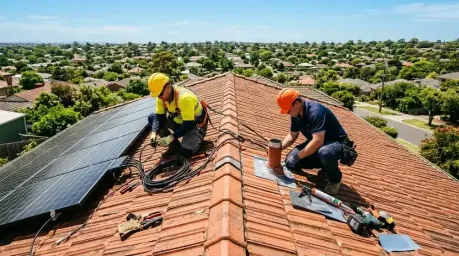
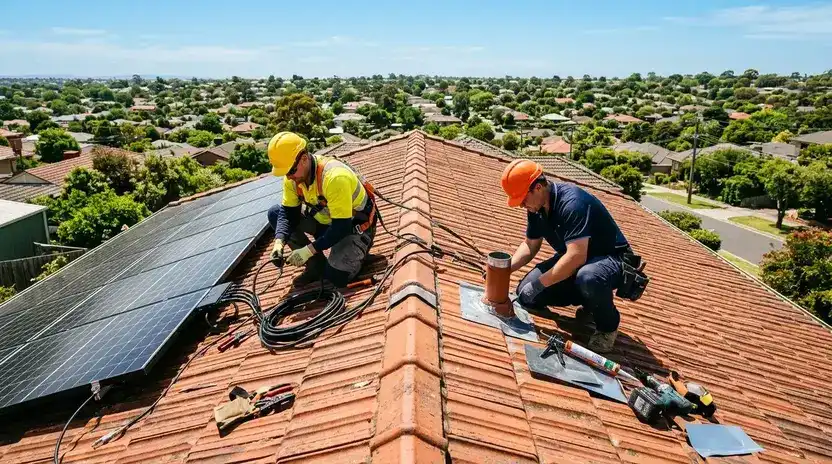
Solar is the most common reason electricians and roof plumbers end up on the same site. The solar installer or electrician handles the panels, inverter, and wiring. But solar arrays require roof penetrations for mounting brackets and cable management, and those penetrations need to be flashed and sealed to prevent water ingress.
On tile roofs, incorrect flashing around solar mounting feet is one of the leading causes of slow leaks that don't show up until months later. On metal roofing, the same principle applies with different materials and techniques.
If your solar installer doesn't coordinate with a licensed roof plumber on the sealing work, you're accepting a weatherproofing risk. A good electrical contractor will flag this before the job starts and either include a roof plumber in the scope or advise you to arrange one.
Skylight Wiring and Installation
Skylights and solar tubes are another classic two-trade job. The skylight itself is a roof penetration that needs precise flashing to remain watertight, especially in Melbourne, where the weather can shift from baking heat to heavy rain in a single afternoon.
If you're installing a ventilating skylight with an electric opener, a heat-sensing unit, or an integrated blind motor, an electrician handles the wiring while a roof plumber handles the opening in the roof. Trying to split this work across two separate booking dates without coordination often leads to one trade undoing what the other just did.
For anyone researching this in Victoria, working with a team that does roof plumbing Melbourne and understands how these jobs intersect with electrical scope is worth prioritising over booking trades independently with no communication between them.
Ducted Air Conditioning and Exhaust Systems
Ducted systems require penetrations for intake, exhaust, and refrigerant lines. Exhaust fans, range hoods vented to the exterior, and bathroom extraction fans all punch through the roof or eaves. Each one of those exits is a potential water entry point if not sealed and flashed correctly.
The electrician connects the unit and runs the wiring. The roof plumber ensures the penetration is weatherproofed so that years down the track, you're not chasing a mysterious leak back to an exhaust vent that was never properly flashed.
Switchboard Upgrades and External Conduit
Less obvious but worth knowing: when electricians run external conduit along exterior walls and up onto the roof for solar or communications cabling, the point where conduit enters the roof space needs a weatherproof seal. This is a small job, but it's one that's often skipped, particularly on older homes where someone just stuffs some foam around the entry point and calls it done.
A proper seal here involves a flashed conduit entry, not just sealant. It's a minor cost at the time of installation and a significant problem if you skip it.
How to Coordinate Both Trades Effectively
The simplest approach is to work with an electrical contractor who already has working relationships with licensed roof plumbers. Some electrical businesses in Melbourne and broader Victoria operate as part of broader trade networks, which means they can coordinate sequencing, keep both parties briefed on the job scope, and avoid the scenario where trades show up on different days with no handover between them.
If you're managing the trades yourself, give both contractors the full picture upfront. Share the plans, confirm who handles what at the roof penetration level, and make sure the roof plumber signs off on weatherproofing before the electrician finalises the installation.
The Short Answer
Any time electrical work breaks the plane of your roof, including solar, skylights, ducted systems, and external conduit entry points, you need a roof plumber involved. Not after the fact. Not when the water shows up. Before the first penetration is made.
Getting both trades coordinated from the start is the difference between a clean, watertight installation and an expensive callback six months later.
Would you like a version with a different word count, a more direct CTA at the end, or adjusted to target a specific suburb or regional audience in Victoria?

Liam Fairfax
Solar Energy Advocate. Renewable Energy Expert. Sustainability Enthusiast.
Liam Fairfax is dedicated to transforming Adelaide homes with efficient, sustainable solar power, empowering homeowners and eco-conscious residents to embrace a brighter, greener future. Join him on our blog for valuable insights and practical advice that simplify your solar journey and enhance your energy independence.